
Last updated on June 17th, 2026 at 04:54 pm
Singapore is famous for its food, but breakfast is one of the best ways to understand how locals live, eat and gather. Long before the lunch crowds arrive, neighbourhood coffee shops, hawker centres and food courts are already busy with people starting the day over kopi, kaya toast, noodles, rice dishes and freshly made flatbreads.
Singaporean breakfast culture reflects the country’s multicultural heritage. Chinese, Malay, Indian and Peranakan food traditions have all contributed to what people eat in the morning. Some breakfasts are light and simple, while others are hearty enough to keep you full for hours.
This article is part of our Exploring Singapore Like a Local series, which introduces visitors to the food, traditions and daily experiences that shape life in Singapore. For travellers who want to explore Singapore’s food culture beyond the guidebooks, our Private Street Food Tour combines local tastings with stories of migration, heritage and community, offering a deeper understanding of the dishes that Singaporeans enjoy every day.
What Do Singaporeans Eat for Breakfast?
Singaporeans enjoy a wide variety of Singaporean breakfast foods. Popular choices include kaya toast and soft-boiled eggs, nasi lemak, roti prata, fishball noodles, idli, mee siam, chee cheong fun and chwee kueh.
Many of these dishes can be found in hawker centres, kopitiams and neighbourhood coffee shops across the island. For visitors, trying local breakfast is a simple and enjoyable way to experience Singapore beyond major attractions and shopping streets.
Table of Contents
1. Kaya Toast and Soft-Boiled Eggs
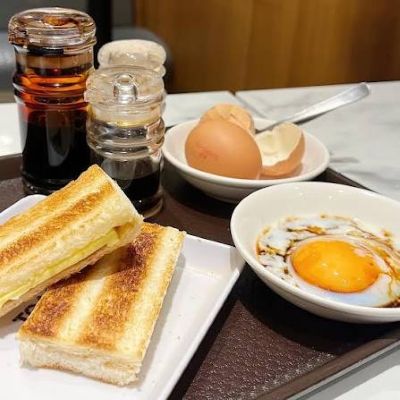
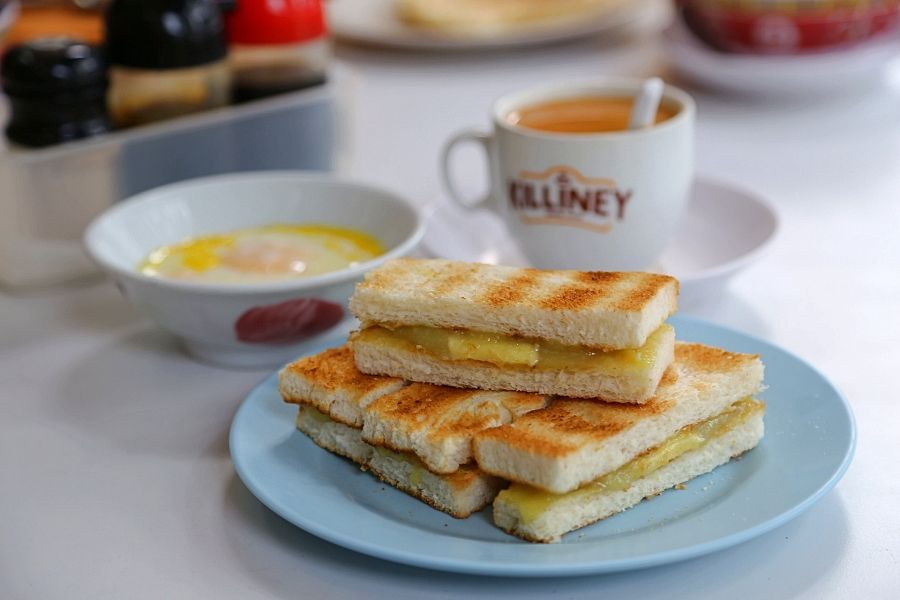
Ask Singaporeans what a local breakfast look like and you are likely to hear “kaya toast and soft-boiled eggs”. From the young to the young at heart, it is a meal that satisfies without overly filling you.
The meal typically consists of toasted bread spread with kaya, a fragrant jam made from coconut milk, eggs and pandan. It is usually served with slices of butter, two soft-boiled eggs seasoned with dark soy sauce and white pepper, and a cup of local coffee or tea.
Kaya toast is closely associated with traditional coffee shops, or kopitiams, many of which were shaped by early migrant communities. Today, visitors can find this breakfast at both old-school coffee shops and modern local chains. For first-time visitors, this is one of the easiest Singaporean breakfasts to try. It is simple, affordable and offers a taste of local coffee shop culture.
2. Nasi Lemak
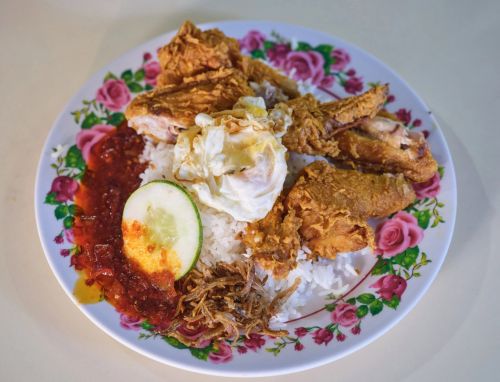
Nasi lemak is one of Singapore’s most beloved rice dishes and is often eaten for breakfast, although it is now enjoyed throughout the day. The dish centres on fragrant rice cooked with coconut milk and pandan leaves. It is usually served with sambal chilli, fried anchovies, peanuts, cucumber and egg. Depending on the stall, you may also find versions with fried chicken, fish, otah or other side dishes.
Nasi lemak is closely associated with Malay food traditions, although it is enjoyed widely across communities in Singapore. Its combination of rich coconut rice, spicy sambal and savoury accompaniments makes it a satisfying way to begin the day. For visitors who prefer a heartier breakfast, nasi lemak is a good choice.
3. Roti Prata
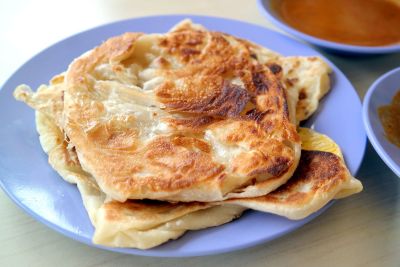
For visitors who prefer a heartier breakfast, nasi lemak is a good choice. The dough is stretched, flipped, folded and cooked on a flat griddle until crisp on the outside and soft within. It is usually served with curry, commonly fish curry, mutton curry or dhal.
Plain prata and egg prata remain the most popular choices, although many stalls also offer variations such as onion, cheese, banana and chocolate prata. Some eateries serve prata late into the night, making it both a breakfast staple and a popular supper dish. For tourists, roti prata is especially enjoyable because it is freshly cooked to order at many stalls. Watching the dough being stretched and flipped is part of the experience.
4. Fishball Noodles
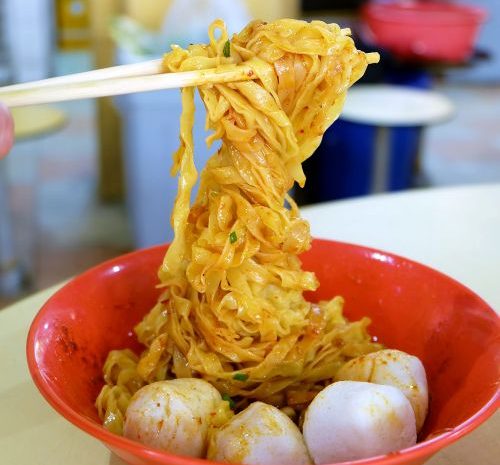
Fishball noodles are a familiar hawker dish that many Singaporeans eat for breakfast or lunch. A typical bowl includes springy fishballs served with noodles, fish cake, vegetables and sometimes fish dumplings. You can usually choose the type of noodle, such as mee pok, mee kia or kway teow.
Fishball noodles can be served dry or in soup. The dry version is tossed with sauce, chilli and vinegar, while the soup version is lighter and comes in a clear broth. This is a comforting, everyday dish rather than a ceremonial or festive food. For visitors, it offers a good introduction to the kind of noodle dishes Singaporeans regularly eat at hawker centres and coffee shops.
5. Idli
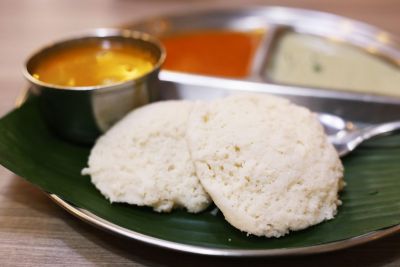
Idli is a traditional South Indian breakfast made from a fermented batter of rice and lentils. The batter is steamed into soft, round cakes that are usually served with coconut chutney and sambar, a lentil-based vegetable stew. Compared with roti prata, idli is lighter in texture and milder in flavour.
In Singapore, idli is commonly found at Indian eateries, especially in Little India and neighbourhoods with South Indian food stalls. While it may be less familiar to some international visitors than prata, it remains an important part of South Indian breakfast culture. Trying idli helps visitors see that Indian food in Singapore is not limited to curries and flatbreads. It also includes lighter steamed dishes, fermented batters and vegetarian-friendly options.
6. Mee Siam
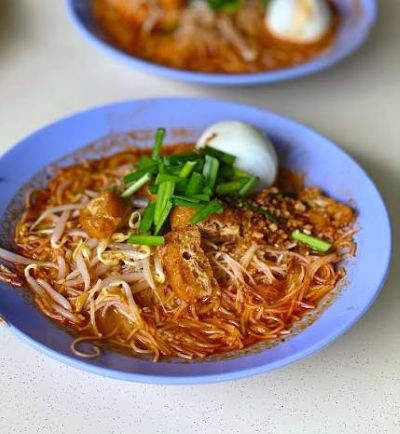
Mee siam is a rice vermicelli dish served with a sweet, sour and mildly spicy gravy. The name “mee siam” is often linked to Siam, the old name for Thailand, but its origins are not always described in the same way. Some accounts connect the dish with Thai influence, while others point to Malay or Peranakan origins. In Singapore, it is best understood as part of the region’s shared food culture, where ingredients and techniques have travelled across communities.
A typical bowl includes bee hoon, or rice vermicelli, served in a tangy gravy with ingredients such as tamarind, spices and fermented bean paste. It is often topped with hard-boiled egg, tofu puffs, beansprouts, chives and lime. Mee siam is a good example of the layered flavours found in Singapore hawker food. It is not simply spicy; it is also tangy, savoury and slightly sweet.
7. Chee Cheong Fun
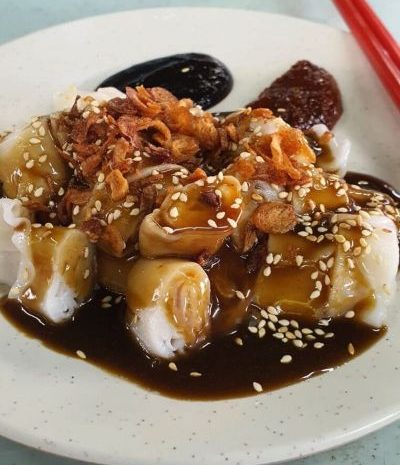
At hawker centres and coffee shops, chee cheong fun is often served plain with sauces. In restaurants or dim sum settings, it may come filled with ingredients such as prawns, char siew or vegetables. As a breakfast dish, chee cheong fun is light, soft and easy to eat. It is a good choice for visitors who want something simple but distinctly local.
8. Chwee Kueh
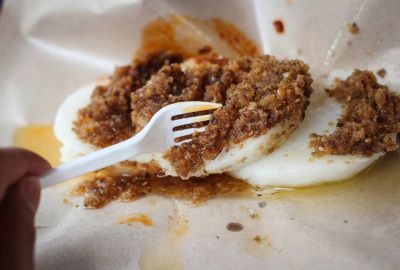
Chwee kueh is a traditional Teochew-style breakfast made with steamed rice cakes topped with preserved radish. The rice cakes are soft and mild in flavour, while the preserved radish topping adds saltiness, texture and aroma. Chilli is often served on the side for those who prefer more heat.
Compared with kaya toast or nasi lemak, chwee kueh may be less familiar to many visitors. However, it remains a beloved local breakfast and can still be found at selected hawker centres and food stalls.
Chwee kueh is a good reminder that Singapore’s food culture includes many traditional snacks and breakfast dishes brought by early migrant communities and adapted over time.
Where to Experience Singaporean Breakfast Culture
One of the best ways to try Singaporean breakfast foods is to visit a hawker centre or kopitiam in the morning. These dining spaces are an important part of local life and offer a wide range of affordable dishes under one roof.
For visitors who are new to local dining culture, our Guide to Eating at a Hawker Centre in Singapore is a helpful place to start. It explains how to order food, find seats and navigate a hawker centre with confidence.
Kopitiams
Kopitiams are traditional coffee shops where locals gather for breakfast, coffee and casual meals. They are good places to try kaya toast, soft-boiled eggs, kopi and simple noodle dishes. Many kopitiams are found in residential neighbourhoods, making them a good way to observe daily life beyond tourist areas.
Hawker Centers
With over 100 hawker centres across Singapore, travellers are spoilt for choices when it comes to trying local breakfast foods. Depending on the centre and stall opening hours, visitors may find nasi lemak, fishball noodles, mee siam, and many other dishes.
In Summary
Singapore’s breakfast culture offers a fascinating introduction to the country’s multicultural heritage. From kaya toast and soft-boiled eggs to nasi lemak, roti prata, idli and chwee kueh, these dishes reflect the communities and traditions that have contributed to Singapore’s food culture.
Breakfast is also one of the simplest ways to experience daily life in Singapore. Whether you are eating at a neighbourhood kopitiam or a busy hawker centre, you are taking part in a routine that many locals know well.