

Last updated on April 14th, 2026 at 09:01 pm
Search for Chinatown Singapore and you’ll likely land on a familiar visual: rows of restored shophouses in bright pastels, lantern-strung streets, and a steady flow of visitors moving between eateries and souvenir stalls. It’s an image that feels complete at first glance. But Chinatown is not a district that reveals itself all at once.
Observe closely — down a quieter street, behind a temple courtyard, or inside an unassuming shop — and a different side of the neighbourhood begins to emerge. One shaped by migration, trade, faiths, and daily life of locals. This guide explores a selection of hidden gems in Chinatown Singapore, from historic streets to local shops and cultural spots worth seeking out.
Hidden Gems in Chinatown Singapore: What to See Beyond the Main Streets
Chinatown Singapore is not just one neighbourhood, but a historic district made up of four areas — Telok Ayer, Kreta Ayer, Bukit Pasoh, and Tanjong Pagar. The district began to take shape in the early nineteenth century, when migrants from southern China and southern India settled here, building communities around trade, places of worship, and shared networks.
In its early years, Chinatown formed part of the main town south of the Singapore River, where daily life was closely tied to commerce, religion, and community. Over time, it became one of the most active yet densely populated parts of the city, reflecting both the opportunities and challenges faced by early settlers.
Today, much of Chinatown has been conserved, with historic shophouses adapted into cafés, shops, and cultural spaces. This blend of past and present is what makes exploring the hidden gems in Chinatown Singapore especially interesting — each street offering a different perspective on how the district has evolved.
1. Thian Hock Keng Temple – Singapore’s Historic Waterfront Temple
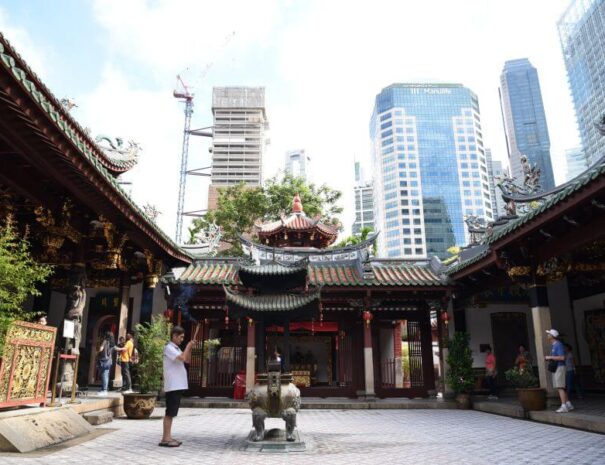
Long before Chinatown took its present form, newly arrived migrants would have first encountered this temple from the sea. Built by the Hokkien community in the nineteenth century, Thian Hock Keng Temple was dedicated to Ma Zu, protector of seafarers.
For many, arriving in Singapore meant weeks of uncertainty at sea. The temple became a place to give thanks for safe passage and mark the start of a new life. Although the shoreline has long since moved, the temple still carries that sense of arrival.
Launched during Singapore Art Week, our Culture Art & Architecture provides a concise history of early Singapore, beginning at Telok Ayer, with Thian Hock Kheng as one of the stops on the guided walking tour.
2. Keong Saik Road – From Privilege to Vice to Dining Destination
Keong Saik Road today is known for its restaurants, bars, and boutique hotels set within conserved shophouses. But its past tells a different story. In the late nineteenth and early twentieth centuries, the street was associated with brothels, opium dens, and gambling houses. These activities reflected the realities of a port city shaped by migrant labour.
Today, the area has been transformed, but its layered history remains part of what makes it so interesting to explore.
3. Mosque Street – Tamil Muslim Heritage and Early Trade Networks
Chinatown is often associated with Chinese heritage, but Mosque Street highlights the district’s multicultural roots. The nearby Masjid Jamae was built by Tamil Muslim traders who were part of Singapore’s early commercial networks in the nineteenth century.
The street offers a reminder that Chinatown was never shaped by a single community, but by many groups living and working alongside one another.
4. Tanjong Pagar – From Coastal Village to City Edge

Tanjong Pagar meaning Cape of Stakes in Malay, refers to fishing methods once used along the coastline.
What is now part of Singapore’s financial district began as a coastal settlement tied to the sea. As the nearby port developed, the area became closely linked to dockside activity, where migrant labourers worked in trade and shipping, connecting Singapore to regional networks.
Beyond its well-known attractions, these hidden gems in Chinatown Singapore reveal a different side of the district — one defined by independent tea houses, bookstores, cafés, and thoughtfully curated lifestyle shops.
5. Tea Chapter – A Traditional Chinese Tea Experience
Set within a restored shophouse, Tea Chapter offers visitors a chance to experience Chinese tea culture in a more hands-on way. Guests are guided through the tea-making process, learning how different teas are prepared and enjoyed.
The calm setting provides a welcome break from the surrounding streets, making it a good place to slow down and spend some time. Our Private Custom Tour lets you do just that: we tailor your itinerary to your interests and incorporate a Chinese tea demonstration (additional fee applies) to enhance your cultural experience of Chinatown with added insights from your local tour guide.
6. Littered with Books
Spread across two storeys of a Chinatown shophouse, Littered With Books is an independent bookstore known for its well-curated selection of fiction and literature. A nice spot to slow down for a while — browse local and international titles, and take a break from the busy streets.
7. Apartment Coffee – A Minimalist Coffee Experience
Apartment Coffee is a small, understated café that focuses on doing one thing well — coffee. With its clean interior and attention to detail, it has become a favourite among coffee enthusiasts. It’s a nice respite from the heat, especially if you’re exploring Chinatown on foot.
8. Tong Heng – A Taste of Old Chinatown
Tong Heng has been part of Chinatown’s food scene since the 1920s and is best known for its diamond-shaped egg tarts. Another tasty Cantonese-style savoury snacks include red bean pastry and walnut cookies. The bakery remains popular with both locals and visitors, and queues are common. For many, it’s a familiar stop — a simple way to experience a long-standing Chinatown favourite.
9. Late Morning – Thoughtful Design for Everyday Living

Late Morning is a small lifestyle store along South Bridge Road that focuses on simple, well-made tableware and everyday objects. The space is calm and minimal, offering a different pace from the surrounding streets. It’s a good place to browse for something practical yet thoughtfully designed.
Seeing Chinatown Differently
Chinatown Singapore goes beyond its well-known landmarks, with its story rooted in the people who arrived, settled, and built lives here. These hidden gems in Chinatown Singapore offer a way to experience that history more closely — through its streets, shops, and everyday spaces.
For those who want a deeper understanding of the district, exploring Chinatown on a guided walking tour offers context and stories that you might not experience on your own. A meaningful way to experience Chinatown beyond the surface!