
Singapore may be known for its Marina Bay skyline and ultra-modern architecture, but the soul of the city lies in its historic streets and cultural landmarks. Since gaining independence in 1965, its history and culture have been shaped by centuries of trade, migration, and the enduring heritage of diverse communities rooted in its immigrant past
Across the island, heritage districts, religious landmarks, national museums, and historical places in Singapore trace the transformation of a small 19th-century trading port into one of the world’s most dynamic multicultural cities. From the lively streets of Chinatown to the colourful traditions of Little India, these heritage sites in Singapore reflect a nation built on diversity, resilience, and community.
Visitors are invited to step beyond the city’s modern facade and immerse themselves in neighbourhoods where past and present exist in harmony. Here, centuries-old temples stand alongside contemporary art galleries. Colonial-era civic buildings house world-class museums. Places of worship representing many faiths sit within walking distance of one another; a powerful testament to Singapore’s social cohesion and multicultural heritage.
Whether you’re visiting Singapore for the first time or returning, its comprehensive selection of historical landmarks, World War II sites, cultural gems, and museums offer a deeper understanding of the city. Exploring these historical places in Singapore enables you to better appreciate the nation’s journey to independence and beyond.
Table of Contents
Best Historical Places in Singapore
If you’re looking for the best historical places in Singapore, these standout sites offer a clear introduction to the nation’s past, from early trading settlements to wartime history and modern nation-building.
These locations are among the most visited heritage sites in Singapore and can be explored independently or combined into a well-planned route across the city.
- Chinatown – One of the most important historical places in Singapore, reflecting early Chinese migrant communities, clan associations, and traditional trades
- Little India – A vibrant district showcasing Indian heritage, religious traditions, and long-standing cultural practices
- Kampong Glam – The historic seat of Malay royalty, anchored by Sultan Mosque and rich in Arab trading heritage
- Civic District – Home to colonial-era landmarks, national monuments, and key moments in Singapore’s founding and independence
- Thian Hock Keng Temple – One of the oldest Chinese temples, built by early Hokkien migrants along the original coastline
- National Museum of Singapore – The country’s oldest museum, offering a comprehensive overview of Singapore’s history and transformation
- Battlebox – A preserved underground command centre where decisions during World War II shaped Singapore’s fate
- Changi Chapel and Museum – A war museum that shares personal stories of resilience during the Japanese Occupation
These historical places in Singapore are located across the city’s main cultural districts, making it easy to explore several within a single day. Many are also accessible via MRT or public transport in general, allowing travellers to navigate efficiently between sites.
For a deeper understanding of how these places connect, guided experiences can help bring together the historical context, architecture, and cultural significance behind each location.
Top Historical Places in Singapore (Quick List)
If you’re short on time, these are the top historical places in Singapore to prioritise:
- Chinatown
- Little India
- Kampong Glam
- Civic District
- Thian Hock Keng Temple
- National Museum of Singapore
- Battlebox
- Changi Chapel and Museum
Top Cultural and Historical Places to Visit in Singapore
If you’re short on time, these are some of the most meaningful historical places in Singapore to explore—each offering a different lens into the city’s past and cultural identity:
Chinatown – the heart of early Chinese migrant communities, where temples, shophouses, and hawker culture converge
Little India – a vibrant enclave rich in Indian heritage, temples, and traditional trades
Kampong Glam – the historic Malay and Arab quarter, anchored by the iconic Sultan Mosque
Civic District – home to colonial landmarks, national monuments, and key moments in Singapore’s history
Thian Hock Keng Temple – one of the oldest Chinese temples reflecting early maritime heritage
National Museum of Singapore – the country’s oldest museum tracing Singapore’s evolution
National Gallery Singapore – a cultural landmark housed in historic civic buildings
Battlebox – an underground WWII command centre
Changi Chapel and Museum – a moving tribute to wartime resilience
Many of these sites are located within Singapore’s historic districts and can be explored together on foot or via a short MRT ride, making it easy to experience multiple cultural neighbourhoods and historical places in Singapore within a single, well-paced day.
Main Cultural Districts in Singapore Explained
Singapore’s key cultural districts each represent different communities and historical influences:
- Chinatown – Chinese migrant heritage, temples, clan associations
- Little India – Indian culture, religion, and traditional trades
- Kampong Glam – Malay and Arab heritage, royal history
- Civic District – Colonial administration and national landmarks
- Joo Chiat & Katong – Peranakan culture and architectural heritage
Historic Districts to Explore
Singapore’s historic districts are living stories of migration, trade, and cultural exchange, and are among the most fascinating historical places in Singapore to explore today. Exploring these neighbourhoods is one of the best ways to experience the history and culture in Singapore and see how early communities shaped today’s vibrant city.
For those looking to explore these neighbourhoods in greater depth, a guided walking tour can offer valuable context—bringing together the stories, architecture, and cultural nuances that are easy to miss when navigating on your own.
Chinatown
Chinatown is one of the most atmospheric historic and cultural districts in Singapore and a must-visit for anyone interested in the city’s heritage sites.
When Sir Stamford Raffles established Singapore as a British trading port in 1819, the Chinese community was allocated land southwest of the Singapore River. Thousands of migrants soon arrived in search of opportunity, creating a bustling district filled with traders, craftsmen, and clan associations.
Today, Chinatown is a fascinating mix of old and new. Narrow streets are lined with beautifully restored shophouses, while temples, clan associations and traditional medical halls stand alongside modern cafés, boutiques, and art galleries. Chinatown is also filled with hidden gems, especially for travellers seeking things to do off the beaten path.
Street art adds another layer of storytelling. Murals across the district, including works by Singaporean artist Yip Yew Chong, depict vivid scenes of early migrant life and the vital role trades and cultural practices played in supporting the Chinese community.
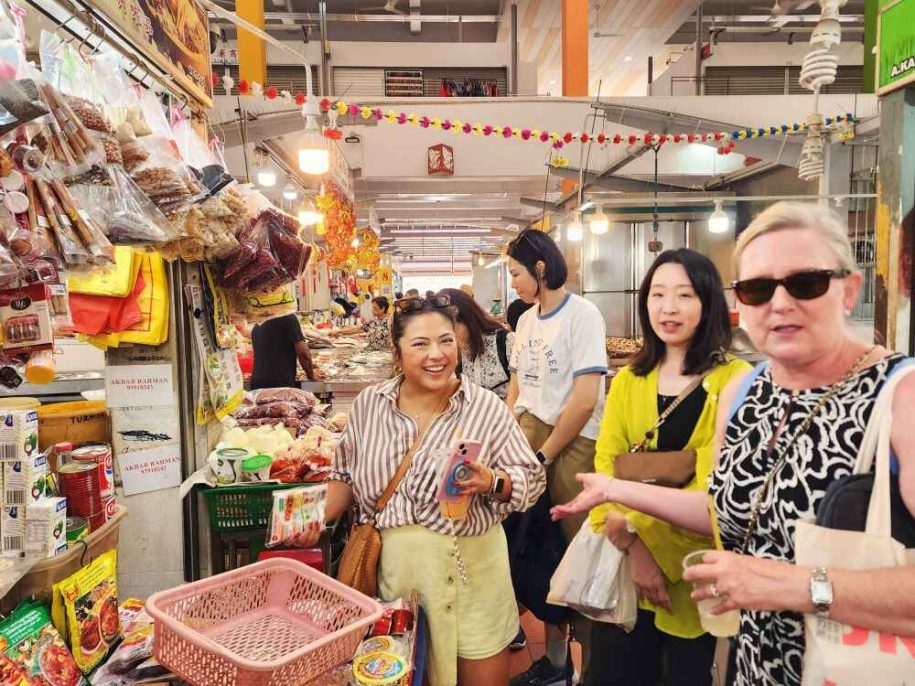
Chinatown is also one of the best places to experience Singapore’s famous hawker culture, recognised by UNESCO as an Intangible Cultural Heritage. At Chinatown Complex Market & Food Centre, Singapore’s largest hawker centre, more than 220 stalls serve everything from Michelin-recognised dishes to beloved local classics.
Little India
Step into Little India, and the city instantly bursts into colour, fragrance, and rhythm. If you’re searching for cultural things to do in Singapore, this vibrant neighbourhood is a perfect place to start, especially on a Little India guided tour that combines culture and tastings. One of the city’s most dynamic cultural enclaves, the district has been the heart of the Indian community since the 19th century. Wander down Serangoon Road, where flower garlands, spice stalls and gold jewellery shops line the streets, creating a sensory experience unlike anywhere else in the city.
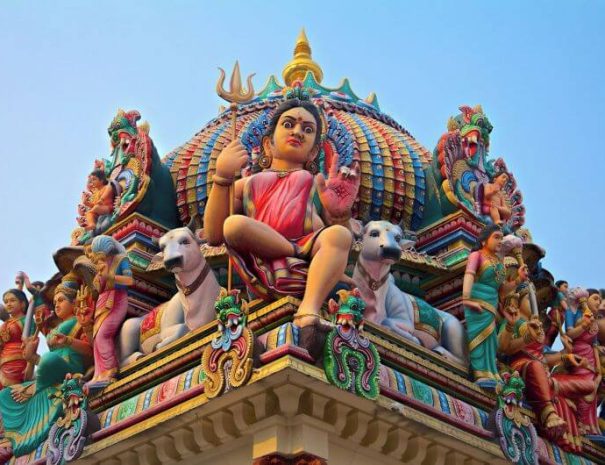
A must-see cultural landmark is Sri Veeramakaliamman Temple, dedicated to the goddess Kali. Its colourful tower rises above the street, decorated with intricate sculptures of Hindu deities. Nearby Tekka Centre is a bustling market where visitors can sample delicious hawker dishes such as biryani, roti prata, and Indian sweets.
For a deeper look at the community’s heritage, the Indian Heritage Centre traces the journey of Indian communities across Southeast Asia through engaging exhibits. Come evening, the streets glow with fairy lights and bustling night markets, especially during Deepavali festival, when Little India transforms into a dazzling celebration of culture, cuisine and tradition.
Kampong Glam
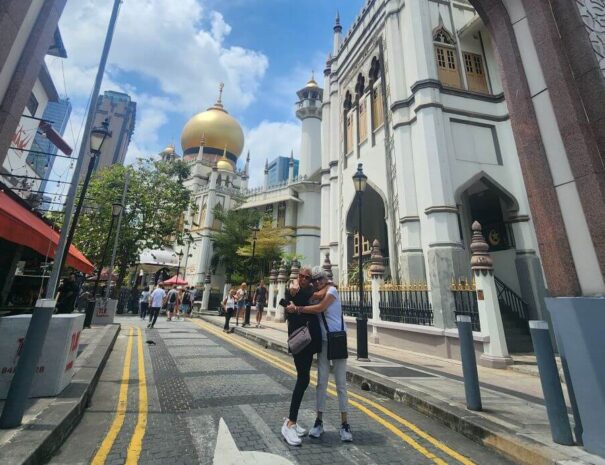
Historic yet effortlessly stylish, Kampong Glam is where Malay heritage meets contemporary creativity. Designated by Stamford Raffles as a settlement for the Malay and Arab communities, the district once served as the seat of Malay royalty. Today, its most famous landmark remains the magnificent Sultan Mosque, whose massive golden dome and grand prayer hall dominate the skyline.
Nearby, the Malay Heritage Centre, housed in the former royal palace, offers insight into the Malay culture, trade and traditions. Beyond the historic landmarks, Kampong Glam has become one of Singapore’s most creative neighbourhoods. Haji Lane is famous for its narrow alley packed with bold vibrant street art, indie boutiques and quirky cafés, while Arab Street continues its long trading heritage with shops selling Persian carpets, batik textiles, and perfume oils.
By night, Kampong Glam transforms again as rooftop bars and buzzing restaurants fill with locals and travellers alike, blending heritage, art and modern culture in one of Singapore’s most atmospheric districts.
Civic District
Described as the birthplace of modern Singapore, Civic District is where Singapore’s colonial past meets its modern arts and culture scene. Located along the Singapore River, the Civic District Singapore area is home to some of the nation’s most famous landmarks and grand neoclassical buildings. The Raffles Landing Site marks the historic spot where Stamford Raffles first arrived in 1819, laying the foundation for modern Singapore.
Nearby, the National Gallery Singapore occupies the beautifully restored former City Hall and Supreme Court buildings and houses the world’s largest public collection of Southeast Asian modern art.
Just across the historic Padang stands the legendary Raffles Hotel Singapore, famous for its colonial elegance and as the birthplace of the famous Singapore Sling cocktail. Nearby green spaces such as Esplanade Park offer scenic riverfront views and a relaxing break from sightseeing.
After exploring the district’s museums and national monuments, head to Lau Pa Sat, a historic, beautifully preserved Victorian market where locals and travellers gather to enjoy sizzling satay and local hawker favourites.
Joo Chiat & Katong
For an unrushed experience of Singapore, head east to Joo Chiat and Katong, a vibrant cultural neighbourhood in Singapore known for its colourful architecture, lively food scene and rich Peranakan heritage.
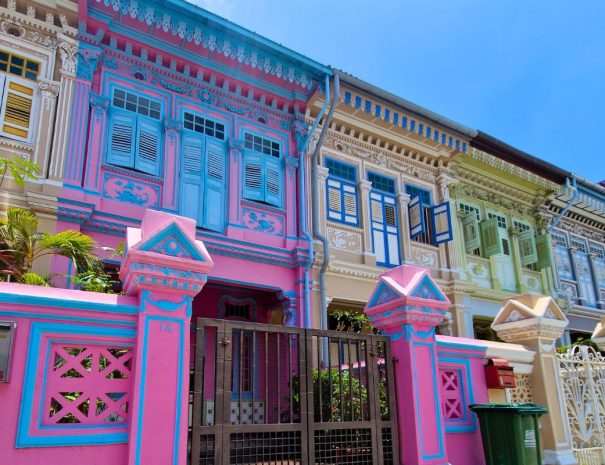
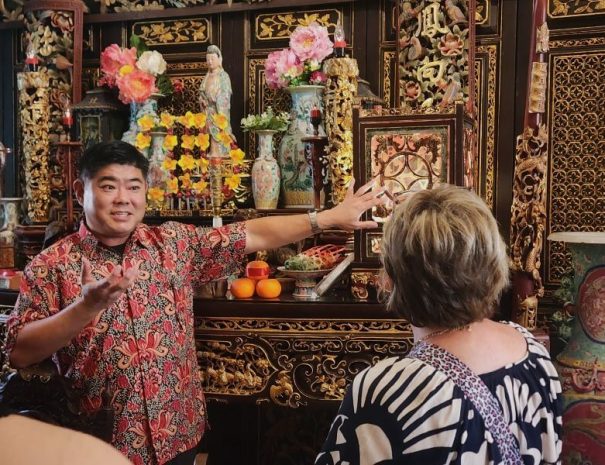
A walk along Koon Seng Road connects the curious traveller to rows of beautifully preserved Peranakan shophouses painted in soft pastel shades, decorated with intricate ceramic tiles, wooden shutters and floral motifs. This area reflects the traditions of the Peranakan, whose unique culture blends Chinese, Malay and Indonesian influences.
A quiet stroll along Koon Seng Road connects the curious traveller to rows of beautifully preserved Peranakan shophouses painted in soft pastel shades, decorated with intricate ceramic tiles, wooden shutters and floral motifs. This area reflects the traditions of the Peranakan, whose unique culture blends Chinese, Malay and Indonesian influences.
Beyond the food, the neighbourhood’s relaxed cafés, boutique shops and heritage homes make it perfect for slow exploration, offering one of the most authentic cultural experiences in Singapore.
Religious and Cultural Landmarks
Singapore’s multicultural identity is reflected in its remarkable collection of temples, mosques, churches, and synagogues. These religious landmarks are not only places of worship but also important heritage sites that reveal the traditions, migration stories, and diverse communities that shaped the nation.
Thian Hock Kheng Temple
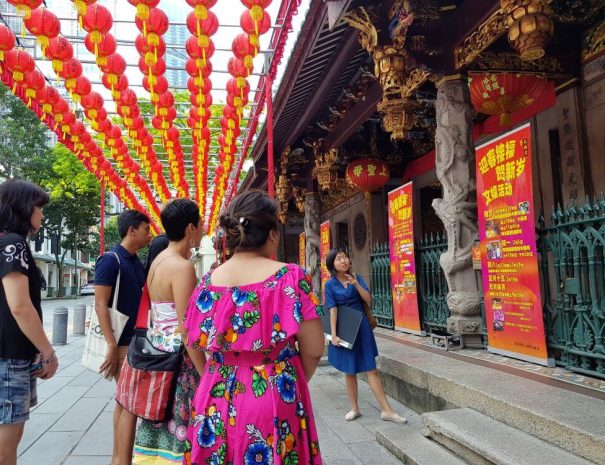
Located in the heart of Chinatown Singapore, Thian Hock Keng Temple is one of the oldest and most magnificent historic temples in Singapore — a must-visit cultural and religious landmark. Meaning “Temple of Heavenly Happiness,” this architectural gem along Telok Ayer Street reflects the city’s early maritime heritage.
Built in 1842 by Hokkien migrants, the temple is dedicated to Mazu, the Goddess of the Sea. Early Chinese migrants would visit the temple to give thanks after surviving long sea journeys to Singapore.
The temple is constructed in traditional southern Chinese Hokkien style without the use of nails. It is admired for its intricate wood carvings, granite columns, colourful dragon and phoenix motifs, and richly detailed roof sculptures. Before land reclamation changed the coastline, the temple once faced the sea, welcoming arriving migrants.
Gazetted as a National Monument in 1973, this heritage site has since earned international recognition, including the UNESCO Asia-Pacific Heritage Award for Cultural Heritage Conservation. Don’t miss the 44-metre mural along the temple’s compound wall by Yip Yew Chong, depicting the journey of early Hokkien settlers.
Sri Veeramakaliamman Temple
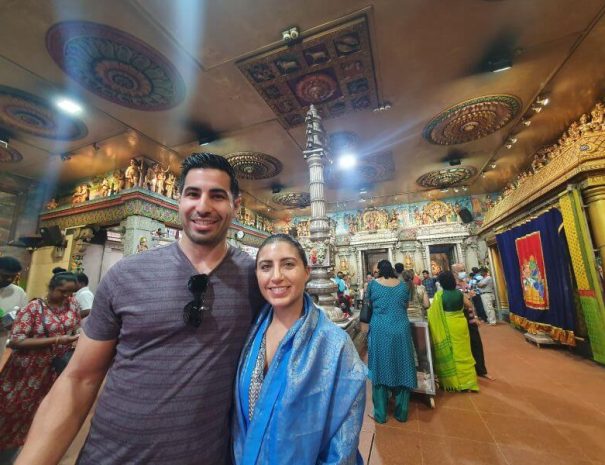
One of the most vibrant cultural landmarks in Little India, Sri Veeramakaliamman Temple is dedicated to the Hindu goddess Kali, worshipped here as Veeramakaliamman. The temple honours a fierce protector believed to destroy evil and safeguard devotees.
An important part of Little India Singapore heritage, the temple was built in the 19th century as Singapore’s Indian community began to grow. Many early migrants settled in Little India, and the temple quickly became a spiritual centre that offered comfort, faith and a sense of belonging in a new land.
Visitors today can admire the gopuram (entrance tower), decorated with detailed sculptures of Hindu deities and mythological figures. Inside the sanctum, look for the black statue of Goddess Kali, adorned with a garland of skulls and holding weapons that symbolise her ferocious power. During Deepavali in October or November, the temple glows with lamps, flowers, and music. Nearby Tekka Centre offers fragrant biryani, roti prata and traditional Indian sweets, making the area a lively cultural and culinary destination.

Masjid Sultan Mosque
Rising above the historic streets of Kampong Glam, the Masjid Sultan Mosque is one of Singapore’s most recognisable religious landmarks. With its gleaming golden domes and grand carpeted prayer hall, the mosque has been a centre of faith, culture, and community for Singapore’s Muslim population.
Built in 1824 for Sultan Hussein Shah, the mosque was later gazetted as a national monument, reflecting its place in Singapore’s history. Visitors exploring the area can also discover the rich Kampong Glam history, as the district was designated during the colonial era as a settlement for Malay and Arab communities.
One of the mosque’s most unique and striking features is the base of its domes, decorated with dark glass bottle ends donated by poorer Muslims, ensuring everyone could contribute. Above them rise two golden onion domes, topped with a crescent moon and star.
Outside prayer hours, visitors can admire elegant arches, intricate arabesque details, and colourful stained-glass windows. Nearby Arab Street and Haji Lane offer cafés, boutiques, and street art, especially vibrant during festivals Ramadan and Hari Raya Aidilfitri.
Maghain Aboth Synagogue
Located in Bras Basah, Maghain Aboth Synagogue is Singapore’s oldest surviving Jewish house of worship, dating back to 1878. Now a National Monument, it stands as an important Singapore religious landmark, reflecting the contributions of the nation’s small but influential Jewish community.
The synagogue’s name means “Shield of Our Fathers” in Hebrew. Beyond worship, it historically served as an important community hub. During the Japanese Occupation, the synagogue provided local Jews with support and a place to exchange information, highlighting its central role in Singapore’s Jewish heritage.
The two-storey building blends colonial and traditional architecture, with arched windows, clean lines, and subtle religious symbols. Neoclassical elements include high ceilings, Roman columns, and a Star of David on the façade. Inside, the bimah (raised pulpit) and eternal lamp offer insight into Jewish worship practices.
For travellers seeking cultural things to do in Singapore, Maghain Aboth offers a quieter but meaningful heritage experience. Surrounded by temples, mosques, and colonial architecture, it’s an ideal highlight on a Singapore heritage trail showcasing the city’s cultural diversity.
Buddha Tooth Relic Temple
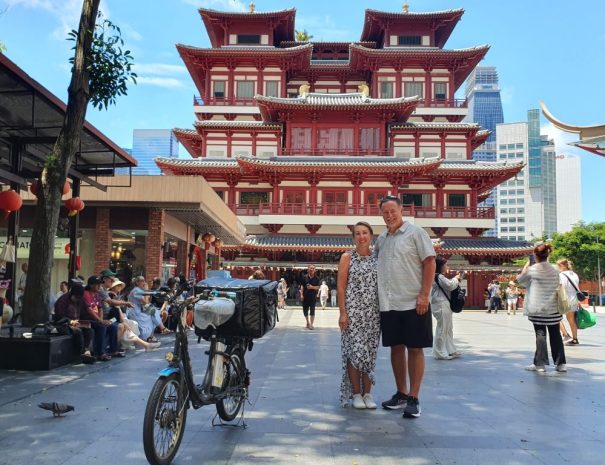
An eye-catching cultural landmark on South Bridge Road, the Buddha Tooth Relic Temple and Museum is one of Singapore’s most impressive Buddhist site. Built in 2007, the temple draws influences from China’s Tang-dynasty architectural style and houses what is believed to be a sacred tooth relic of the Buddha.
The relic is kept in a golden stupa weighing 3,500 kg and topped with over 320 kg of gold. Inside, richly decorated halls display statues, murals, and carvings that showcase Buddhist art and traditions.
Visitors can also observe daily rituals or enjoy a vegetarian meal offered by the temple. The rooftop garden provides peaceful, panoramic views over Chinatown, offering a moment of calm above the bustling streets below.
For those exploring heritage landmarks in Singapore, the temple is a must-see. Combined with a walking tour through Chinatown’s vibrant streets, markets and hawker stalls, it offers an immersive experience of cultural activities in Singapore, blending spirituality, architecture and local life in one unforgettable stop.
St Andrew’s Cathedral
Located along Stamford Road, St Andrew’s Cathedral is the largest Anglican church in Singapore and a must-visit heritage landmark. Built between 1856 and 1861 by Indian convict labourers, the cathedral is a stunning example of Neo-Gothic architecture in Singapore, featuring pointed arches and intricate stained-glass windows.
Gazetted as a National Monument, St Andrew’s Cathedral has played a significant role in Singapore’s history. During World War II, it was converted into an emergency hospital, reflecting its role as a place of refuge.
Today, visitors can admire the cathedral’s soaring arches, serene interiors, and vibrant stained glass, or attend services and concerts that showcase its living Christian heritage. Surrounded by Civic District museums and historic buildings, it makes a perfect stop on a Singapore heritage walk.
Cathedral of the Good Shepherd
Tucked within the historic Civic District, the Cathedral of the Good Shepherd is the oldest Roman Catholic church in the country and an important heritage landmark. Built in 1847, the cathedral features elegant colonial architecture, with stained-glass windows, wooden pews, and a peaceful courtyard that offers a quiet retreat from the surrounding city.
The cathedral’s name carries a poignant history. It was inspired by a note written by Laurent Imbert, the first Roman Catholic missionary to visit Singapore in 1821. Later serving in Korea, he urged fellow missionaries to surrender to protect their congregations. Their martyrdom inspired the church’s name.
During World War II, the cathedral served as an emergency hospital, reinforcing its role as a place of refuge. Today, it remains an active centre of worship while welcoming visitors interested in Singapore’s Christian heritage and colonial history.
Museums in Singapore That Explore the Nation’s History, Culture, and Art
Museums across the island offer insight into the communities and historic events that shaped the nation, adding depth to the many historical places in Singapore found throughout its districts.
National Museum of Singapore
Step into the National Museum of Singapore, the country’s oldest museum, and discover the story of Singapore from its early beginnings to modern nationhood. Housed in a grand Neo-Palladian building dating to 1887, the museum seamlessly blends historic architecture with a sleek contemporary glass and metal extension.
Through a comprehensive collection of interactive displays, rare artefacts, and multimedia storytelling, there is something for every visitor. A standout feature is the Glass Rotunda where Singapore Odyssea: A Journey through Time, an immersive exhibition, reimagines Singapore’s history through its enduring relationship with the sea, tracing how maritime influences continue to shape the nation’s past, present, and future, while raising important questions around environmental conservation and sustainability. Singapore History Gallery is currently being revamped and will reopen in October 2026.
After touring the galleries, unwind in the museum’s leafy outdoor spaces or enjoy a coffee at Dame Museum cafe overlooking the historic façade. For travellers seeking cultural and educational things to do in Singapore, the National Museum is an immersive learning destination with stories of various communities and important events that shaped the nation. It’s a must-visit historical landmark for anyone wanting a deeper understanding of Singapore’s story.
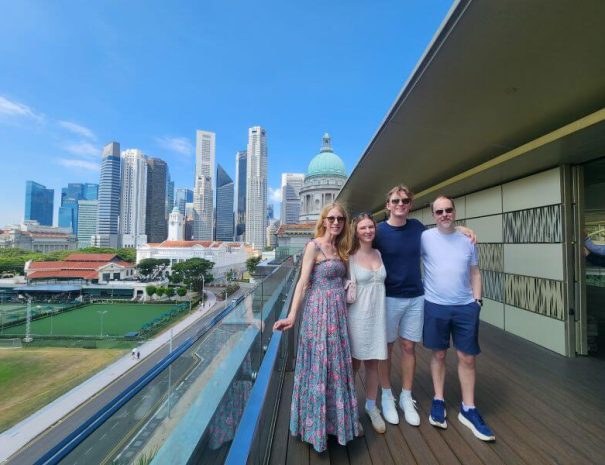
National Gallery Singapore
Housed in the historic former City Hall and Supreme Court buildings, the National Gallery Singapore is home to the world’s largest public collection of modern Southeast Asian art. Spanning over 64,000 square metres, the Gallery brings together grand neoclassical architecture with contemporary design elements, including a striking glass-and-steel canopy designed to respond to Singapore’s tropical climate. The transformation of the buildings was recognised with the President’s Design Award in 2015.
Visitors can explore an extensive collection of modern Singaporean and Southeast Asian art through thoughtfully curated galleries, immersive installations, and rotating exhibitions. Beyond the art, the building itself holds historical significance as the site of the Japanese surrender in 1945 and where Lee Kuan Yew was sworn in as Singapore’s first Prime Minister in 1959.
With its blend of art, architecture, and history, the Gallery offers a compelling cultural experience in the heart of the Civic District and is a key stop for travellers exploring cultural things to do in Singapore.
Asian Civilisations Museum
Overlooking the Singapore River, the Asian Civilisations Museum showcases the rich and diverse cultural heritage of Asia and its influence on Singapore. Set inside a beautifully restored colonial building, the museum showcases the trade routes, artistic traditions, and cultural exchanges across Asia.
Inside, visitors can explore galleries dedicated to China, Southeast Asia, South Asia, and the Islamic world. Displays feature exquisite ceramics, textiles, religious sculptures, and ceremonial objects that reflect centuries of cultural interaction. One of the museum’s standout highlights is the fascinating Tang Shipwreck, a 9th-century cargo recovered near Belitung Island. The discovery includes thousands of treasures such as Tang dynasty ceramics, as well as gold and silver artefacts that reveal early maritime trade networks.
After exploring the galleries, visitors can admire Singapore’s amazing skyline by taking an art jaunt along the riverfront spotting thought-provoking art installations from the likes of 24 Hours in Singapore (Baet Yeok Kuan) and First Generation (Chong Fah Cheong). For travellers seeking cultural things to do in Singapore, the Asian Civilisations Museum is one of the top places to visit in Singapore for culture, offering a deep dive into Asia’s interconnected history, art and heritage.
Malay Heritage Centre
Set in the heart of Kampong Glam, Malay Heritage Centre explores the history, culture, and identity of Singapore’s Malay community. Housed in the former Istana of the Sultan of Johor, the site reflects the area’s role as the historic seat of Malay royalty.
Following its reopening in April 2026, the Centre places greater emphasis on everyday life and cultural identity, alongside its royal heritage. Exhibits also highlight Singapore’s connections to the wider Malay world, tracing links across the Nusantara through trade, migration, and shared traditions.
Interactive displays, personal stories, and cultural artefacts bring these themes to life, offering insight into how Malay identity continues to evolve. A visit here pairs naturally with a walk through Kampong Glam, offering a deeper understanding of heritage, home, and belonging within one of Singapore’s foundational communities.
Little India Heritage Centre
Located in the heart of Little India, the Indian Heritage Centre explores the rich history and culture of Singapore’s Indian community. The striking contemporary building draws inspiration from traditional Indian stepwells and transforms into a glowing “lantern” after dark, making it a standout landmark among the historic districts in Singapore.
Inside, five galleries trace the journeys of Indian migrants to Singapore, from early traders to modern communities. Interactive displays, rare artifacts, and community-donated items such as traditional jewelry and personal memorabilia bring stories of migration, trade, faith, and everyday lives to life. Exhibits also highlight vibrant festivals and religious traditions that remain central to the community today.
To round off your visit, take a stroll along nearby Serangoon Road or stop by Tekka Centre for authentic Indian food. As evening falls, don’t miss photographing the museum’s glowing facade. A visit to the Indian Heritage Centre is one of the top cultural attractions in Singapore, offering a fascinating glimpse into heritage, traditions, and community life.
Children’s Museum Singapore
Located just a 5-minute walk away from National Museum of Singapore is the Children’s Museum Singapore, a lively space where young minds can explore culture, history, and creativity through play. Designed especially for children, its interactive exhibits encourage curiosity, storytelling, and problem-solving, making it one of the most engaging family-friendly cultural attractions in Singapore.
Hands-on exhibits cover topics from science and history to art and music, giving kids plenty of opportunities to learn by doing. Highlights include the immersive “A Voyage Back in Time,” where children can explore a playable ship, and “Into the Hawkerverse” and “Marketplace,” where they can build and run a LEGO hawker stall, try a teh tarik–making game, or step into traditional trade roles like a street barber or food vendor in a recreated street scene.
The family-friendly museum also hosts rotating workshops, performances, and themed events, keeping every visit fresh. Its central location allows visitors to pair a museum trip with nearby parks or cultural landmarks, making it a lively and educational stop for families exploring cultural things to do in Singapore.
Peranakan Museum
Located in the historic Civic District, the Peranakan Museum brings to life the colourful heritage of the Peranakan communities of Southeast Asia. Through beautifully curated galleries, the museum explores a unique culture shaped by Chinese, Malay, and Indonesian influences.
Highlights include intricate beadwork, ornate jewellery, traditional wedding attire, carved wooden furniture, and vibrant Nyonya ceramics. The galleries focus on themes such as origins, home, and style, offering a glimpse into everyday Peranakan life, from betel nut sets to family altars and ceremonial traditions.
Interactive displays and recorded interviews with members of the local Peranakan community add personal stories to the exhibits, helping visitors understand family histories, customs and ceremonies. Workshops and guided tours often spotlight traditional crafts, food, and design, making it a rewarding stop for travellers interested in cultural things to do in Singapore.
The Peranakan Museum is highly recommended for those interested in Peranakan material heritage and the cultural insights it offers into one of Singapore’s key cultural communities.
World War II Historical Sites in Singapore
Singapore’s World War II history shaped the nation and offers enduring lessons in courage, sacrifice, and resilience. Visiting these sites—from bunkers and memorials to museums—provides insight into the people and events behind some of the most significant historical places in Singapore
These sites take on even greater meaning when explored through guided storytelling, where individual locations are connected into a broader narrative of Singapore’s wartime experience.
Battlebox
Hidden beneath the green slopes of Fort Canning Hill, the Battlebox is an underground bunker that once served as the British command centre during World War II. Step into its dimly lit, narrow corridors and you’re transported back to 1942, when British military leaders planned Singapore’s defence against advancing Japanese forces.
This is the very site where Lieutenant General Arthur Percival and his Allied officers made the critical decision that led to Singapore’s surrender, marking the start of a three-and-a-half-year occupation. Today, guided tours take visitors through preserved briefing rooms, original maps, and wartime equipment while stories and historical accounts bring the tense final days of the battle to life.
After exploring the bunker, wander the surrounding greenery of Fort Canning Park, where walking trails and cultural landmarks offer additional context to Singapore’s historic districts. For travellers seeking historical and cultural things to do in Singapore, Battlebox offers a gripping, immersive experience.
War Memorial Park
Located in the city centre, War Memorial Park is a tranquil green space dedicated to civilians who lost their lives during the Japanese Occupation. At the heart of the park stands the striking Civilian War Memorial, a 61-metre structure. Its four pillars symbolise the Chinese, Malay, Indian, and Eurasian communities who perished during the war, while the pillars joined at the base symbolize unity among Singapore’s diverse cultures.
Surrounded by manicured gardens, reflective pools, and commemorative plaques, the park invites quiet contemplation amid the city bustle. It provides a meaningful pause to reflect on Singapore’s wartime struggle, hardships and the resilience that shaped the nation’s modern identity.
Conveniently located near the Civic District’s museums and heritage landmarks in Singapore, War Memorial Park is a poignant stop for travellers seeking both remembrance and insight into the country’s history.
Kranji War Memorial
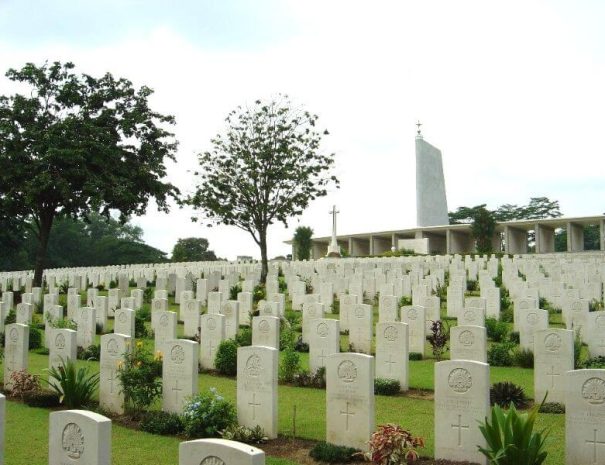
Located in the northwestern part of Singapore, the Kranji War Memorial is a moving tribute to the men and women who died defending Singapore and Malaya during World War II. Set on a hillside overlooking the surrounding countryside, the memorial is part of the wider Kranji War Cemetery, where thousands of Allied soldiers are remembered.
The site features landscaped terraces, memorial walls engraved with the names of the missing, and rows of white headstones that create a powerful sense of remembrance. A reflecting pool and quiet pathways invite visitors to walk through the grounds and reflect on the human cost of war. From the hilltop, sweeping views stretch across the Straits of Johor, the same waters crossed by Japanese forces during the 1942 invasion of Singapore.
Today, the Kranji War memorial stands as a solemn place of reflection. For travellers seeking historical and cultural things to do in Singapore, it offers a powerful insight into the courage, sacrifice and legacy of those who shaped the nation’s wartime story.
Changi War Chapel
Located in eastern Singapore, Changi Chapel and Museum shares the powerful stories of prisoners of war and civilians interned in Changi during World War II. Designed as a place for remembrance and reflection, the museum highlights the courage, resilience and survival of those who endured the Japanese Occupation.
At the centre of the museum is the Changi Chapel, a moving reconstruction of the simple worship spaces built by prisoners inside the camps. Within the chapel, visitors can see meaningful artefacts such as the Changi Cross and replicas of murals created by POW Stanley Warren, who used improvised materials like crushed chalk and camouflage paint.
The museum’s galleries also showcase paintings, photographs, and personal belongings donated by former prisoners and their families, offering insight into daily life in the camps and the liberation that followed.
For travellers looking for cultural and historical things to do in Singapore, the Changi Chapel and Museum provides an intimate and deeply human perspective on wartime history that larger memorials sometimes overlook.
Former Ford Factory
Located along Upper Bukit Timah Road, the Former Ford Factory is one of Singapore’s most important World War II landmarks. Opened in 1941 as Southeast Asia’s first car assembly plant for the Ford Motor Company, it became the site where British forces formally surrendered to the Japanese army on 15 February 1942, marking a significant moment in Singapore’s wartime history.
Shortly after the surrender, the factory was seized by Japanese forces and run by Nissan to produce military vehicles. Today, the building is preserved as a National Monument and museum, offering an immersive experience for visitors interested in Singapore’s wartime past.
Inside, visitors can explore recreated offices, living quarters, and the historic boardroom where the surrender negotiations took place. Outside, a recreated 1940s-style Garden of Crops shows how local communities adapted to wartime shortages, by growing their own food to survive.
Interactive displays, photographs, and personal stories bring this dramatic period to life, highlighting the resilience and daily struggles of Singaporeans under Japanese occupation. For travellers seeking historical and cultural things to do in Singapore, the Former Ford Factory is a must-visit destination, combining heritage, education and a deeply moving narrative of courage, survival and perseverance.
Frequently Asked Questions About History and Culture in Singapore
What are the best historical places in Singapore to visit?
Some of the best historical places in Singapore include Chinatown, Little India, Kampong Glam, and the Civic District. Key landmarks such as Thian Hock Keng Temple, National Museum of Singapore, and the Former Ford Factory offer deeper insight into Singapore’s history, culture, and transformation.
What are the main cultural districts in Singapore?
Singapore’s main cultural districts are Chinatown, Little India, and Kampong Glam. Each reflects the heritage of different communities and offers unique experiences through architecture, food, religion, and daily life.
Are there museums in Singapore that focus on history and culture?
Yes, Singapore has several museums that explore its history and culture, including the National Museum of Singapore, Asian Civilisations Museum, and Peranakan Museum. These institutions provide deeper context to the historical places found across the city.
What are some important religious landmarks in Singapore?
Important religious landmarks include Thian Hock Keng Temple, Sri Veeramakaliamman Temple, Sultan Mosque, Buddha Tooth Relic Temple, and St Andrew’s Cathedral. These sites reflect Singapore’s multicultural and multi-religious identity.
Can you explore Singapore’s historical sites in one day?
Yes, many historical places in Singapore are located close to one another and can be explored within a day, especially within the main cultural districts. Using the MRT or joining a guided walking tour makes it easy to cover multiple areas efficiently.
What are the key World War II sites in Singapore?
Key World War II historical sites in Singapore include the Battlebox, Changi Chapel and Museum, Kranji War Memorial, and the Former Ford Factory. These sites provide insight into Singapore’s wartime experience and resilience.