
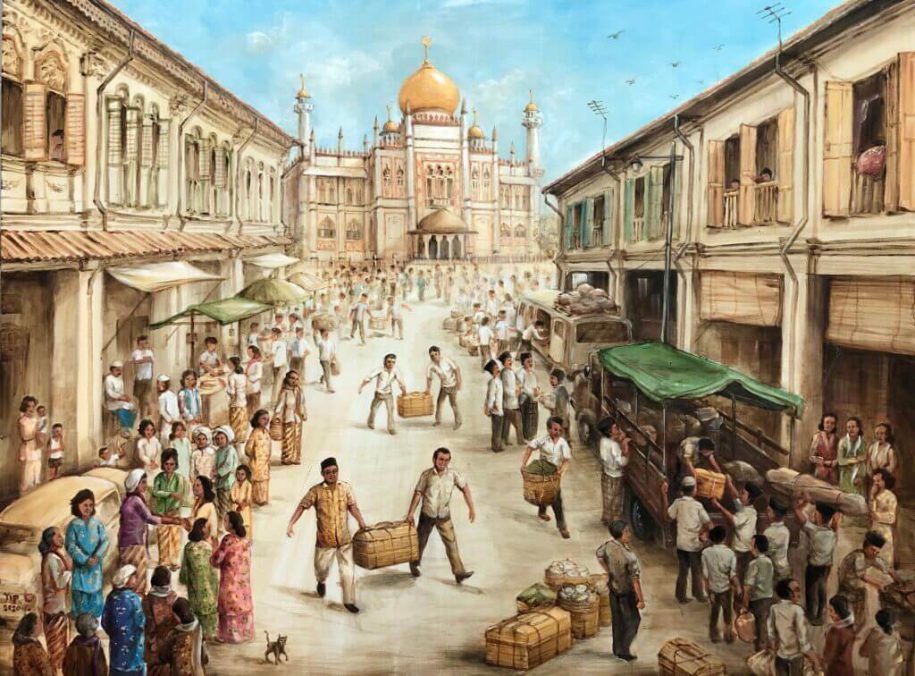
Today, Haji Lane is one of Singapore’s most photographed streets, known for its bright and bold murals, independent boutiques and lively cafés. Long before its name became associated with these contemporary attractions, the street was connected to a very different chapter of Singapore’s history, when Muslim pilgrims passed through the island on their journey to Mecca.
Before air travel, Singapore was an important departure point for Muslims from across Southeast Asia undertaking the Hajj, the annual pilgrimage to Mecca and one of the five pillars of Islam.
Kampong Glam, with its established Malay and Muslim communities, was closely connected to this movement of people, faith and commerce.
Table of Contents
Singapore's Role in the Hajj Pilgrimage
For Muslims living in the Malay Archipelago, reaching Mecca was once an extraordinary undertaking.
Before regular steamship services, pilgrims travelled aboard merchant vessels, often changing ships at different ports and waiting for favourable monsoon winds. The journey could stretch over several months, with no certainty of when travellers would reach their destination or return home.
According to historian Nor Afidah Abd Rahman, writing for the National Library Board’s BiblioAsia, early pilgrims commonly travelled through Aceh and India before reaching Yemen or Jeddah, the gateway to Mecca.
These voyages were fraught with difficulties, from violent storms and disease to financial uncertainty. Some pilgrims had to find work along the way to fund the next stage of their journey.
By the mid-19th century, Singapore’s growing importance as a trading port made it a significant departure point for pilgrims from Southeast Asia.
Arab merchants, including the prominent Alsagoff family, helped develop the pilgrimage trade. Established in 1848, Alsagoff & Co. initially operated trading vessels within the Malay Archipelago before expanding into the transportation of pilgrims to Jeddah. By 1871, the Alsagoff-owned Singapore Steamship Company was transporting pilgrims aboard steam-powered vessels, reflecting the growing commercial organisation of the pilgrimage.
Kampong Glam's Connection to the Hajj

Source: Pilgrims on a steamship. Image from Hajjah Amaina Collection, National Archives of Singapore.
While ships departed from Singapore’s port, Kampong Glam was closely associated with the communities and businesses supporting Muslim travellers.
Historically home to Malays, Arabs, Javanese, Bugis and other communities, the neighbourhood maintained strong connections with the wider Muslim world through religion, trade and family networks.
Pilgrims passing through Singapore needed accommodation, provisions and assistance with their onward journeys. For those arriving from other parts of Southeast Asia, the island could serve as a place to prepare before embarking on the long voyage to Arabia.
In the surrounding streets, businesses also catered to pilgrims preparing for their journeys. One example was V. S. S. Varusai Mohamed & Sons, established in 1935, which supplied practical items such as specially designed belts for carrying money and valuables during the pilgrimage.
Haji Lane, now celebrated for its boutiques and street art, was once associated with lodging for Muslim pilgrims. Its past offers a reminder that Kampong Glam was more than a residential quarter or commercial district.
It was part of a wider network connecting Singapore to the religious and cultural life of the Malay Archipelago.
A Journey Fraught with Challenges
One remarkable account of the early pilgrimage comes from Munshi Abdullah, the celebrated Malay writer who departed Singapore for Mecca in 1854.
Travelling aboard the Subulus Salam, Abdullah encountered severe storms and made numerous stops during his voyage. His writings describe the hardships of travelling by sea, when passengers had little control over weather conditions or the length of their journey. After approximately 100 days, Abdullah was believed to have reached Jeddah but died before completing the Hajj.
His unfinished travel account remains an important historical record, offering a rare firsthand perspective on the physical challenges and uncertainties faced by pilgrims travelling across the Indian Ocean.
Life Aboard Singapore's Hajj Ships in the 1970s
More than a century later, sea travel remained central to the pilgrimage experience.
Personal accounts documented in Kapal Haji: Singapore and the Hajj Journey by Anthony Green and Mohd Raman Daud, featured in a 2020 Mothership article, offer a fascinating glimpse into life aboard these ships.
In 1973, Aisha Angullia travelled aboard the Malaysia Kita with her adopted sister, Aisah Ibrahim. Both women had experienced polio and faced physical challenges, yet undertook the pilgrimage after attending religious preparation classes. Their pilgrimage package cost approximately S$2,000, a considerable expense at the time.
Life aboard the ship was basic. Sleeping areas could be hot and crowded, while passengers brought cooking utensils, rice, spices, dried fish and other familiar foods for the journey.
Interestingly, some sleeping areas were identified by pictures of tropical fruits, including rambutans and mangosteens, helping passengers, especially the elderly, to navigate their way around around the vessel.
Despite the discomfort, the voyage also created a sense of community. Pilgrims shared meals, exchanged religious knowledge and supported one another, forming friendships that made the long journey more meaningful.
For many, the experience was not simply about reaching Mecca, but also about the people they encountered along the way.
From Sea Voyages to Air Travel
In the 1970s, commercial air travel became common and affordable. Flights offered a faster and more convenient alternative to lengthy sea voyages, while organised pilgrimage arrangements made travel increasingly accessible.
The transition brought an important chapter of Singapore’s maritime history to a close, ending an era when ships carrying pilgrims connected the island with the wider Muslim world.
Rediscovering Kampong Glam's Hajj Heritage
Today, little of this history is immediately apparent along Haji Lane or Arab Street.
Yet Kampong Glam’s connections with pilgrims, Arab merchants and Muslim communities reveal another side of the neighbourhood’s heritage, one shaped by faith, maritime trade and the movement of people across Southeast Asia.
For visitors exploring Kampong Glam, these stories offer a deeper appreciation of a neighbourhood whose historical significance extends far beyond its brightly-hued shophouses and glittering attractions.